SALT LAKE CITY – Data centers in Utah attract a host of conversations – about the economy, the environment, and AI.
Utah sits near the middle of the list of states with the most data centers. Virginia, Texas, and California have the highest number of operating data centers in the U.S.–with 398, 296, and 277 in each, respectively. While Utah isn’t anywhere near those numbers, data center development in the state shows no sign of slowing down.
To keep track of what’s going on in the state, Utah Junction took a look at every data center that’s currently operational, under construction, or proposed.
Utah currently has 48 operational data centers.
That number isn’t as simple as it sounds — it includes centers on the same campus run by the same company, and some companies operate multiple data centers spread across the state.
Fourteen additional data centers, campuses, or extensions have been proposed in the state.
The data centers in Utah, both existing and proposed, vary widely in size, ownership and function.
Do you know of a data center being proposed in your community that isn’t on our list? Email us here.
What data centers are operating in Utah?
Starting at Utah’s southernmost data center, ValorC3 has a 30,000-square-foot data center in St. George.
Going north to Orem, Fibernet has a 40,000-square-foot data center. Voonami also has a data center in Orem and one in West Valley City.
In Eagle Mountain, Meta has a data center campus spanning 4.5 million square feet. The campus broke ground in 2018 and is operational but still under construction.
The company says it strives to be “water positive” by 2030, meaning Meta plans to restore more water than it consumes with its centers. However, Meta has an agreement with Eagle Mountain to keep its monthly water usage confidential.
The tech giant did provide sustainability reports that showed an increase in the campus’s water and energy usage from 2021 to 2024. Meta said it matches its data center energy use with “100% clean and renewable energy.”
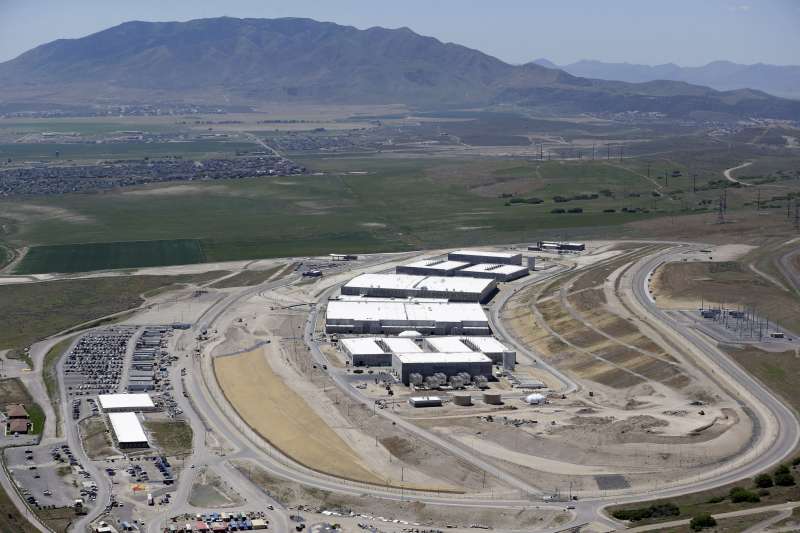
A little further north, in Bluffdale, the National Security Agency’s Utah Data Center campus spans 1 million square feet and is located near Utah Lake. It cost $1.5 billion to build, and the NSA campus includes 11 buildings.
Also located in Bluffdale is DataBank’s Granite Point campus, which has five buildings and spans 257,770 square feet. DataBank also has a 10,610-square-foot data center in downtown Salt Lake City.
Nearby, in Draper, Fiberstate has a data center.
West Jordan is a hub for data centers, housing data centers for Oracle, eBay, Novva, Aligned, and Flexential. Flexential also has three other data centers in Salt Lake City.
Novva’s campus is planned to span 1.5 million square feet and is currently in its third phase of development, adding new buildings to house data centers.
In the neighboring city of Midvale, CirrusDS has a multi-building data center campus.
In West Valley City, EdgeConneX has a 25,000-square-foot data center.
To the northeast, XMission has one of the state’s oldest data centers in downtown Salt Lake City. Lumen also has a data center in Utah’s capital city and one in Ogden.
Also in Ogden is the WebNX data center, which spans over 100,000 square feet.
What data centers are being built in Utah?
The data centers on the way to Utah may be a little bit more familiar.
Several of the proposed data centers have made headlines, some internationally, and stoked concern among Utahns near where they’d be built. Developers and supporters say they’ll bring jobs and economic growth.
In Box Elder County, Kevin O’Leary’s Stratos Project is the subject of two lawsuits and contributed to the election losses of two incumbents. The massive data center campus was originally pitched as 40,000 acres, but O’Leary agreed to cut it to around 20,000 after public pushback.
The Stratos Project will be located in Hansel Valley, near the north arm of the Great Salt Lake. The project’s proximity to the lake and lack of environmental studies have prompted questions and concerns about possible impacts to the state’s water supply, temperatures, and air quality.
Project developers previously told Utah Junction that they would conduct environmental studies as required by state and federal law, but that it’s on hold due to the lawsuits. Developers have also said the Stratos Project will use water-wise cooling systems that will result in lower water consumption over time.
The Box Elder County Commission issued a 180-day moratorium on new data center proposals in the county, but it won’t affect the Stratos Project.
The controversy in Box Elder County sparked a precautionary 180-day moratorium in Cache County. Although data center developers have not approached the county with any proposals, the Cache County Council opted to issue a moratorium so it would be well-prepared if anything comes through in the future.
In Duchesne County, the Nine Mile Data Project, also known as the Uinta Basin Data Center, would occupy roughly 475 acres six miles from Myton. Energence Utah, LLC is sponsoring the project and wants to have it operational by 2029.
Planning commissioners have approved permits for the project. In April, county commissioners declined residents’ appeals to reconsider the permits.
Over in Utah County, Tract is working on two data center campuses. The Pony Express project will sit on 225 acres, while the Pole Canyon project will be almost quadruple the size at 844 acres. Both projects are in Eagle Mountain, near Meta’s data center campus.
Google has also purchased land in Eagle Mountain–300 acres to be exact–for future data center development, but there haven’t been any updates since the land was purchased in 2021.
Also in Eagle Mountain, QTS is finishing construction on a five-building, 193-acre campus expected to be completed by 2029.
The massive campus prompted questions about water usage, but the company said its centers will use a closed-loop system and will not impact local water supply.
A little further south in Utah County, a nine-acre data center proposal remains on pause. The developers of the B+F Timpanogos Data Center sought approval from the Provo City Council in March to rezone land in the city’s East Bay neighborhood to build a data center there. The council rejected the proposal, but said the developers could resubmit in the future.
The Summit Ridge Data Center has been approved in Santaquin, but has been criticized by residents worried about air quality and water usage. However, the project’s developer, Data Center Power Company, said the center will be powered by natural gas and use low levels of water. Developers have yet to say when it plans to break ground on the data center.
Valar Atomics and NVIDIA announced July 1 that they’re partnering on a 30-megawatt, nuclear-powered pilot data center in Orangeville, in Emery County, that will use a helium-cooled reactor instead of water for cooling.
In Millard County, two data center campuses are in development — one backed by Joule and the other by Creekstone Energy.
The Joule site is planned to be 4,000 acres. Developers are gearing up to begin construction.
The Creekstone Energy site, also known as the Delta Gigasite, is under active construction. It will sit on 1,143 acres in Delta. Additionally, BluSky AI has signed a letter of intent to build a 25-acre data center on the Delta Gigasite campus.
Iron County, much like Box Elder County, is currently under a moratorium for data center development.
County commissioners issued the 180-day pause in May. It didn’t affect the Antelope Data Center: officials said that application was already well underway, and the Iron County Planning Commission approved its 640-acre conditional-use permit in June.
The proposed Antelope campus was met with concerns similar to those that residents across the state have had about data centers — focused on environmental impacts and water usage.
The developers of the campus, Pronghorn Development LLC, said that the campus would “implement stringent environmental safeguards,” like water-efficient technology, to protect Iron County’s ecosystem.
Iron County has another proposal, the 2,564-acre Red Butte Energy and Data Center Campus, sponsored by BrightNight. However, in May, its application process was deemed incomplete, and the proposal is on hold until the moratorium lifts.