SALT LAKE CITY – Rhonda Lauritzen grew up taking dips in the Great Salt Lake. She has home video of herself as a tween floating near the beach on the north arm of the lake.
Today, that walk crosses miles of dry lakebed.
Last week, Lauritzen led journalists on a 7-hour tour. She’s been taking media out to sites in Box Elder County since May, when news of the Stratos Project’s approval made international headlines.
The Stratos Project is a proposed data center complex in Box Elder County that, at full build-out, developers say could draw up to 9 gigawatts of power — more than double what the entire state currently uses. The Military Installation Development Authority and Box Elder County commissioners approved the project in May over strong public opposition.
Her family owns Mineral Resources International. Her parents, Hartley and Gaye Anderson, founded the company in 1969. MRI sells mineral supplements derived from the Great Salt Lake.
For Lauritzen’s family, the fight to preserve the lake is both personal and business.
Running out of water
The family owns 135 acre-feet of water rights to the Great Salt Lake, but they currently only use 30% of them under an agreement with the state.
All the water being used right now comes from the south arm, Lauritzen said.
At the northern section of the family’s property, where she grew up swimming, Lauritzen said they can’t get anything out of the lake anymore.
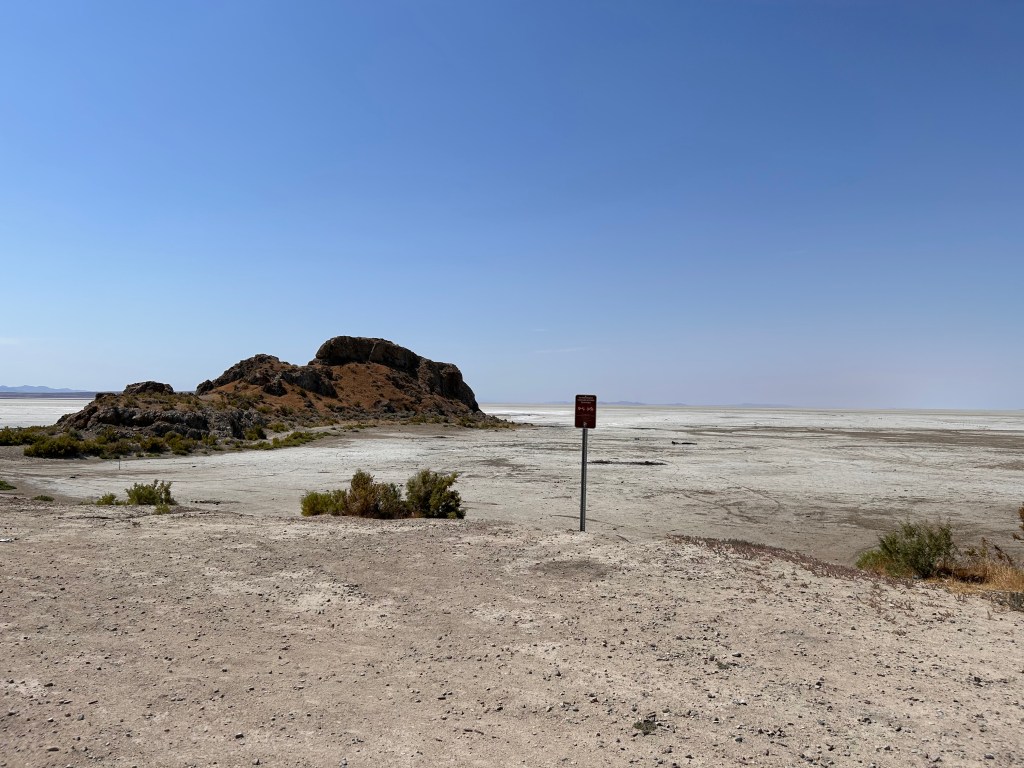
“This should all be underwater,” Lauritzen said as her tour group drove past the north arm of the lake.
Instead, a white strip of lakebed stood out beyond the road.
Lauritzen said her family submitted two protests with the state’s Water Rights Division. The family’s protests were among the 4,000 complaints filed over an application from Stratos Project developers to change the water use from irrigation to industrial.
The family’s protests outline two concerns: quality and quantity of water. They’re concerned the Stratos Project will negatively affect the amount of water in the already declining lake.
Part of the project area, Bar H Ranch, uses nearby salt wells as a water source. The salt wells, when there’s enough water available, feed into the Great Salt Lake.
“We’re concerned if more water comes out of the system, it means less water for all the other water right holders,” Lauritzen said.
That includes her family.
Additionally, Lauritzen’s family is concerned about how a data center might affect the water quality, especially since their company’s products are made for human consumption.
Developers have withdrawn two separate water rights applications since May amid thousands of public protests. As of early June, neither had been refiled, though developers have said they intend to try again.
The tour Lauritzen helped lead last week was coordinated in partnership with Grow the Flow, a local advocacy group aimed at preserving and restoring the Great Salt Lake.
The group’s executive director and global ecologist, Ben Abbott, said during the tour that the state needs to decrease water consumption by around 40% to restore the lake.
“Every new water demand in the system is going to keep us from achieving that goal,” Abbott said. “You can’t negotiate with hydrology.”
Environmental concerns
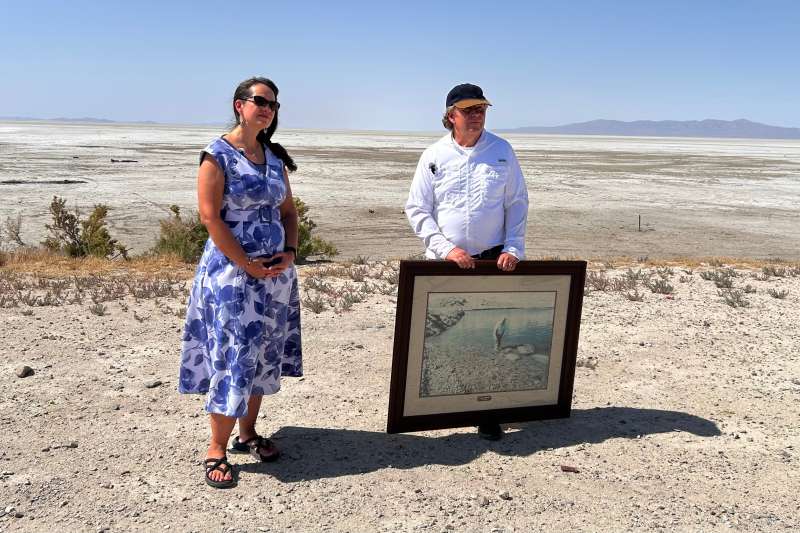
Standing in front of Lone Point at the Great Salt Lake, Lauritzen and her brother Val Anderson held a photo of their father swimming in the lake in the same area.
Now, however, the water is nowhere to be seen from that spot.
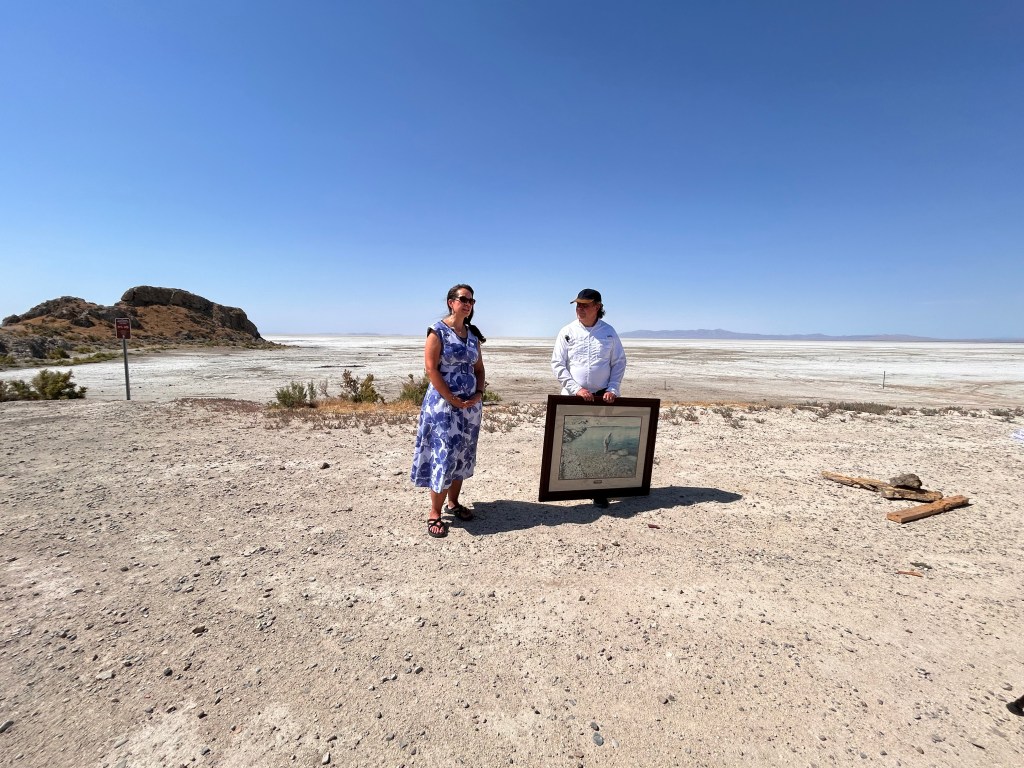
“Even in good water years, the water’s just gone out farther and farther and farther,” Lauritzen said. “At this moment in time, if you want to dip your toe in the water, you’ve got to walk about 4.5 miles to reach the waterline.”
The exposed lakebed has long prompted concern about exposure to toxic elements, such as arsenic. When strong winds pick up dust from the dry lakebed, the Utah Division of Water Resources says the wind carries the dust into nearby communities.
According to the Division of Water Resources, more than 2.66 million people live downwind of the lake.
The toxic lakebed and disappearing water isn’t the only concern.
“It’s not just water, it’s heat,” Val Anderson said last week during the tour. “I’m not aware of any energy production of that magnitude that doesn’t put off heat.”
Scientists have expressed concerns that the Stratos Project could create a heat island near the Great Salt Lake.
Estimates based on the data center’s original size, which has since been cut in half, found that nighttime temperatures near the center could spike by up to 28 degrees Fahrenheit.
“The thermal impact of this project could be enormous, affecting not only the terrestrial ecosystem but also the aquatic ecosystem,” Abbott said.
However, it’s hard to tell what the environmental impact will truly be, as the project’s developers have yet to conduct any official studies.
A physics professor at Utah State University made those estimates independently, a point Abbott acknowledged has skepticism.
“We shouldn’t be putting the onus of proof on a volunteer scientist from a local university. The project needs to do due diligence and prove that it’s not going to harm our water supply, it’s not going to contaminate our food supply, and it’s not going to disrupt our climate,” Abbott said.
The talk of rising temperatures comes as Utah heads towards another scorching summer, with parts of the state already breaking heat records.
Wildfires were also burning across the state, with nearly 356,000 acres actively burning. In Box Elder County, where the Stratos Project will be built, 82 acres were burning after a wildfire sparked over the weekend.
During a public forum last week, MIDA board member and Clearfield City Mayor Mark Shepherd confirmed that an environmental study had not been done yet, but said it was on the way.
In an emailed statement to Utah Junction, MIDA spokesperson Kristin Kenney Williams clarified that the environmental study, though required, was on pause for the time being.
“The development team is required to conduct all state and federally-required environmental studies. However, due to current litigation, all work has paused out of respect for that process,” Williams wrote.
‘The lake connects all of us’
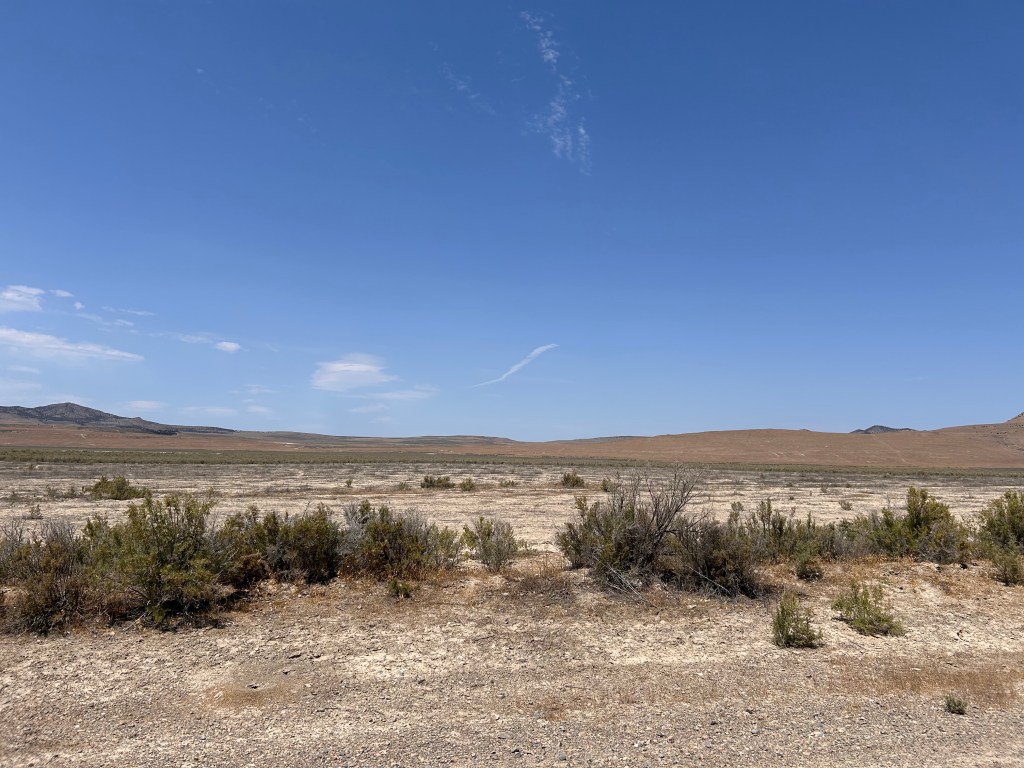
The project area for the data center is located on land that’s easy to categorize as “the middle of nowhere.”
Lauritzen acknowledged that on an average day, you might not run into another person.
“You might ask, what better place to put a data center than where it’s not impacting people directly? But it is directly next to the lake,” Lauritzen said, pointing out that the north arm of the lake sits directly between two data center project areas.
“The lake connects all of us… It affects everybody in Utah,” Lauritzen said.
Lauritzen’s family and the team running Grow the Flow are just one example of the effort Utahns are making to preserve and restore the lake.
The fight over the Stratos Project may have been a flashpoint, but it’s not the beginning or the end of the concern surrounding the lake.