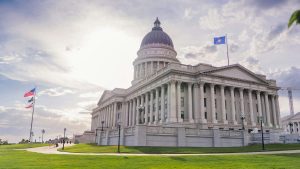
SALT LAKE CITY – In January, the Utah Legislature passed a bill expanding the state’s highest court from five to seven justices.
The expansion of Utah’s Supreme Court didn’t come without criticism, and neither did the confirmation of the state’s newest justices.
Addition of new Utah justices prompts questions
Critics said the expansion of the court was an effort by the legislature and governor to override judicial independence following a spate of rulings that saw Utah Republicans clash with the justices.
Although the five sitting justices were all appointed by Republican governors, rulings in recent years, like in abortion and redistricting cases, were met with disapproval by the state’s Republican lawmakers and governor.
Shortly after the expansion of the court was signed into law, Utah State Bar president Kim Cordova noted that it came at an “interesting” time.. Cordova also said the justice system needs more resources, but in its lower courts.
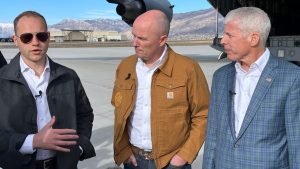
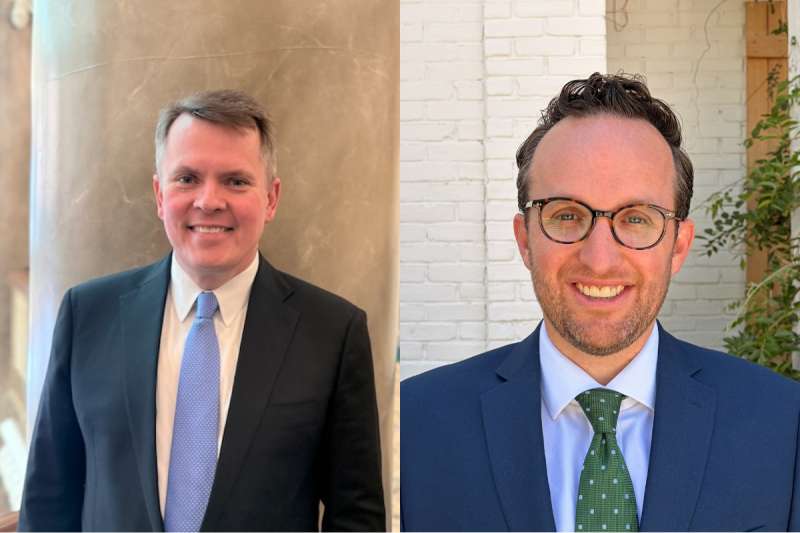
Gov. Spencer Cox nonetheless signed the bill into law in January, and in early June, he appointed Jay T. Jorgensen and Stephen P. Dent to serve on the newly expanded court.
However, the appointments were met with criticism from Co-Equal Utah, a non-profit aimed at upholding the separation of powers. The nonprofit expressed concern that neither Jorgensen nor Dent had prior experience serving as a judge.
Utah Senate Democrats also expressed concern that Jorgensen did not meet constitutional residency requirements.
The Utah Senate ultimately voted to confirm both Jorgensen and Dent, though all six Senate Democrats voted against Jorgensen’s confirmation, while five voted against Dent.
Now that the bill was signed into law and two new justices have been confirmed, Cordova is trying to remain optimistic about the court expansion.
“It happened, and so we are where we are,” she told Utah Junction. “Hopefully, it will make the courts more efficient, because we want litigants to have a finality.”
However, she re-emphasized the importance of providing more resources to the lower courts and said she hopes to see more funding go towards them in the future.
As for the two new justices, Cordova said she had faith in the judicial selection process.
“I’m confident, and I believe in that system, that people who are on the bench are there because of merit, and that’s what we want, right?” she said. “We want smart judges. We want capable, conscientious, and good judges on our bench”
Justice Jay T. Jorgensen
In the governor’s appointment announcement, he called Jorgensen “one of Utah’s brightest legal minds.”
Early on in his career, Jorgensen clerked for Chief Justice William Rehnquist on the United States Supreme Court and for Associate Justice Samuel Alito when he was a judge on the United States Court of Appeals for the Third Circuit.
Prior to his appointment, Jorgensen’s most recent position was as a senior counsel for The Church of Jesus Christ of Latter-day Saints. He’s also worked for Coupang, Inc. and as a Walmart executive.
During his confirmation hearing, Jorgensen faced questions about his residency status, particularly about his time in Chile from 2022 to 2025, where he was serving a mission for the church.
Senators questioned whether this disqualified Jorgensen based on the constitutional requirements for Utah justices.
The Utah Constitution states justices must be “Utah residents for three years preceding selection.”
Jorgsensen told the Senate Judicial Confirmation Committee that he retained his residency through his time in Chile because he owned a home in Provo, fully intended to return to Utah, and never established residency in Chile.
He also incorrectly told senators that the constitutional requirements did not include the word “preceding.”
In his address to the Utah Senate following his confirmation, Jorgensen addressed the issue and clarified he was trying to make a point about the difference in constitutional requirements for justices compared to other officials.
The language in the requirements for the offices of governor, lieutenant governor, attorney general, state auditor, and treasurer says the person must be a resident “for five years next preceding the election.”
“Who decides? You decide. The Constitution has entrusted in you, the senators, whether a person is qualified for this role, but that was the debate that we had is, why does one say ‘next’ and the other one just says ‘preceding,’ meaning at any time?” Jorgensen told senators.
Justice Stephen P. Dent
When Gov. Cox appointed Dent, he said he was confident that Dent would “bring fairness, integrity and sound judgment to Utah’s highest court.”
Prior to his appointment, Dent was the deputy criminal chief and Southern Utah Branch chief in the United States Attorney’s Office for the District of Utah.
In his early career, Dent clerked for the United States District Court for the District of Utah and the United States Court of Appeals for the Tenth Circuit.
Justice Dent’s time with the Senate Judicial Confirmation Committee wasn’t as intense as Jorgensen’s.
In regard to questions about his lack of judicial experience, Dent said he had been studying the Utah Code of Judicial Conduct.
“I’ve read it. I’ve asked current sitting judges questions about it… I still am going to continue to study it and become intimately familiar with it,” Dent told the confirmation committee.
Dent said his work as a federal prosecutor provided him with several skills that would lend themselves to work as a justice.
“I believe that level of neutrality and applying those neutral principles does help with the transition to the bench,” Dent said during his second confirmation hearing.
After his confirmation, Dent addressed the state Senate, saying he had experienced a “feeling of awe” during his confirmation process.
“I stand before you today full of gratitude for my family, for my country, for my state, and for the worthy cause we are all engaged in,” Dent said.